
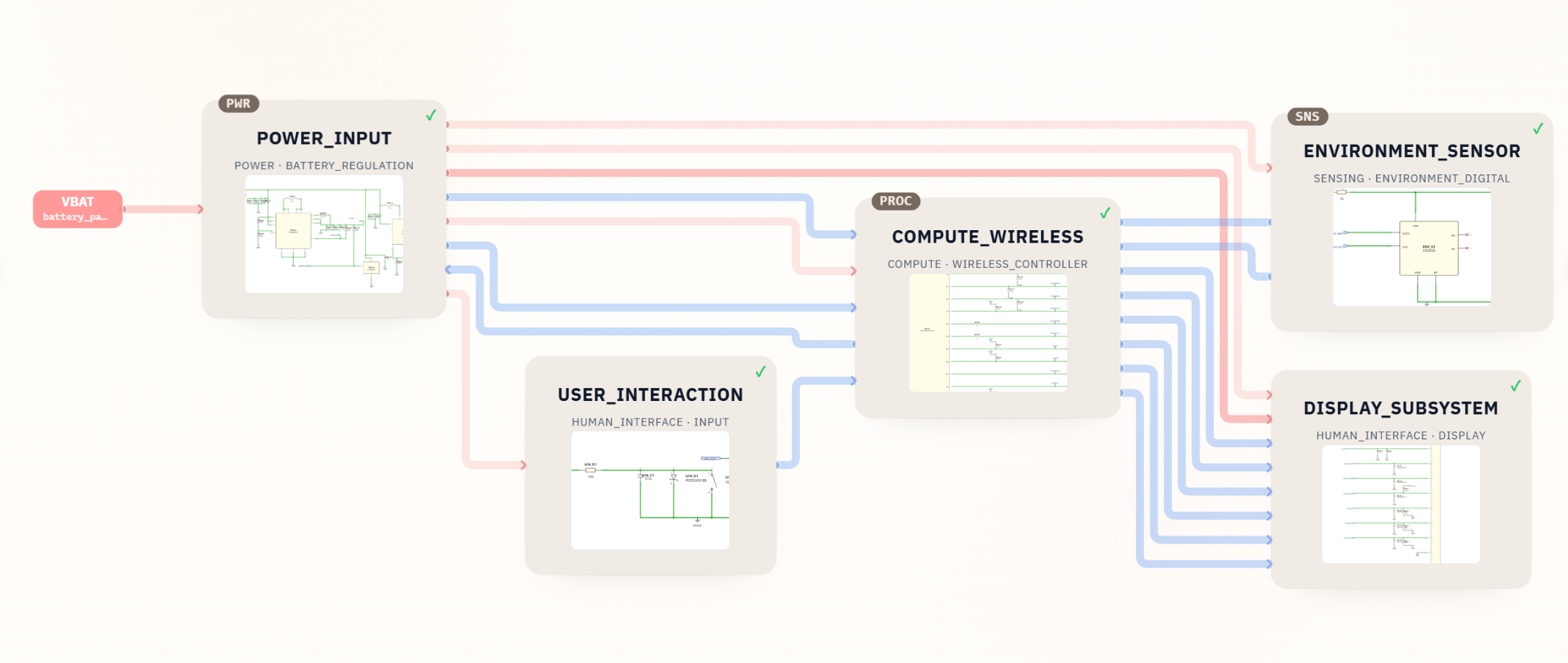
Embedded System Architecture for Hardware Products: From Requirements to KiCad
A practical framework for turning hardware product requirements into power, compute, interface, firmware, and KiCad schematic architecture.
A practical framework for turning hardware product requirements into power, compute, interface, firmware, and KiCad schematic architecture.
Review a bare MAX30102 sensor circuit before PCB layout, including its power rails, I2C, interrupt, grounding, optics, footprint, and testing.
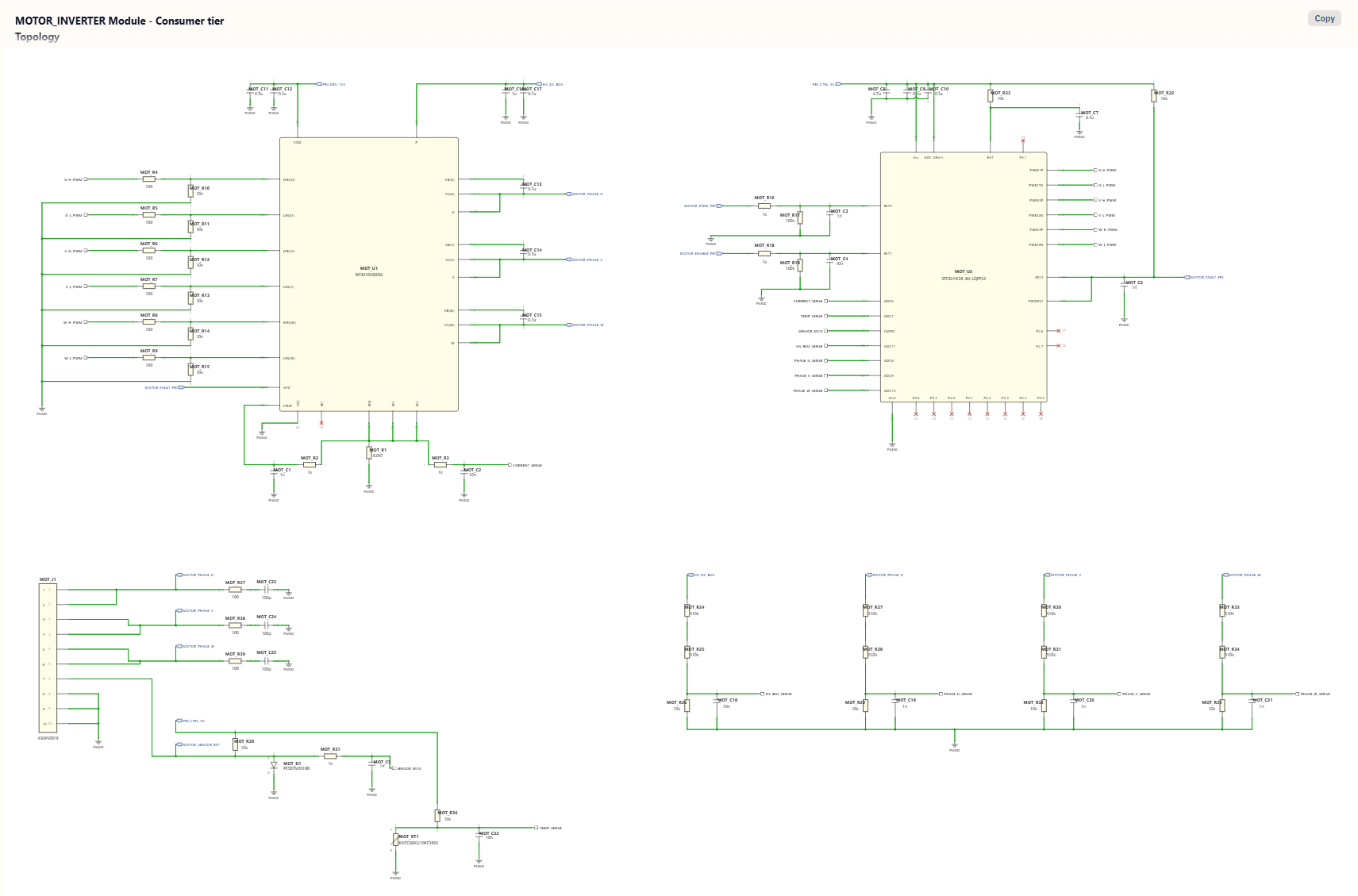
Calculate starting RC snubber values from measured ringing, then review component stress, PCB placement, oscilloscope tuning, thermal loss, and EMI.
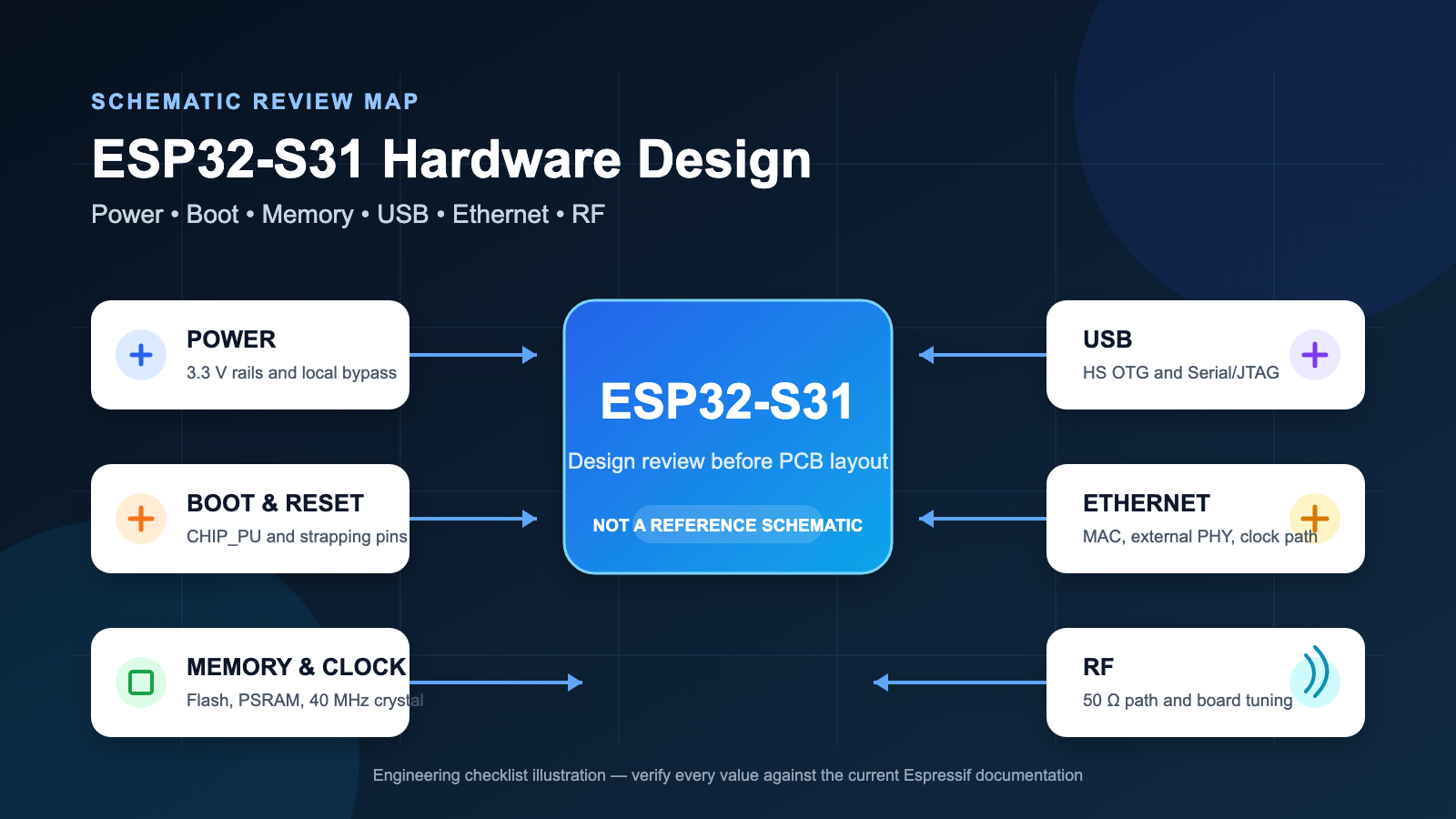
Review an ESP32-S31 schematic before PCB layout, including power, reset, boot pins, flash, clocks, USB, Ethernet PHY, RF, and module selection.
Calculate an LED current-limiting resistor, choose a standard value and power rating, and verify GPIO, PWM, and parallel-LED behavior.
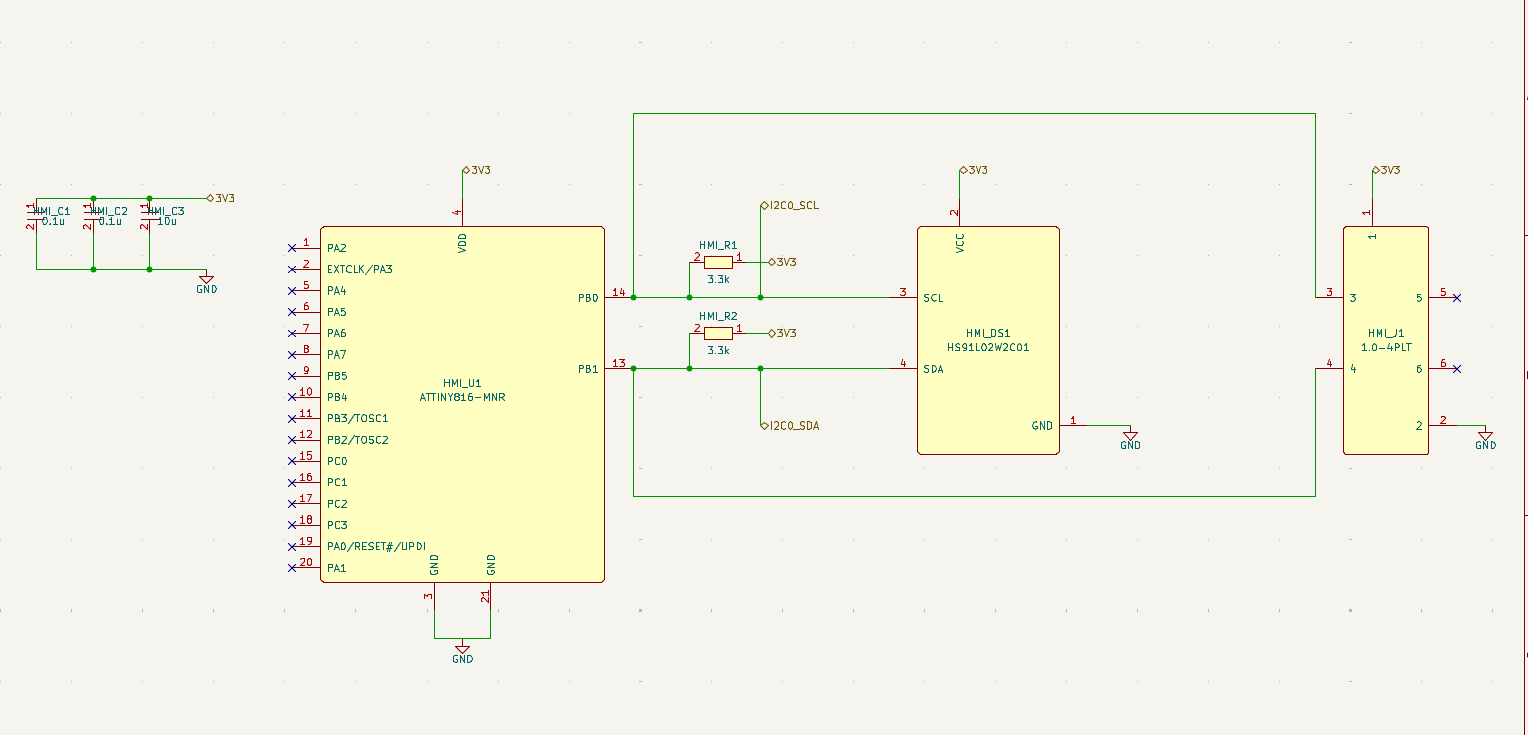
Choose decoupling capacitor values, place them at IC power pins, and review bypass-capacitor current loops before PCB layout.
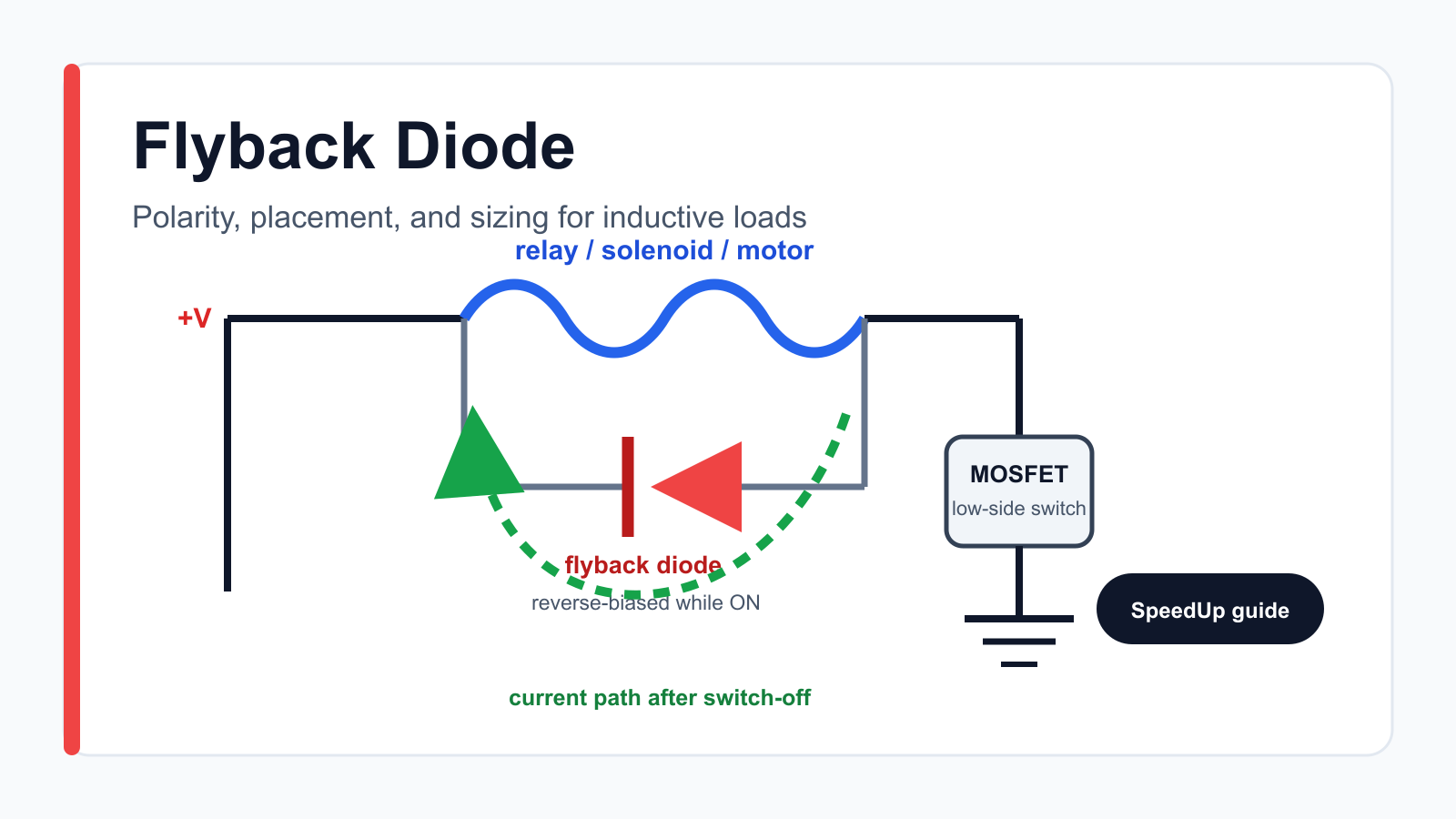
Learn flyback diode polarity, placement, sizing, and clamp choices for relays, solenoids, and motors before PCB layout.
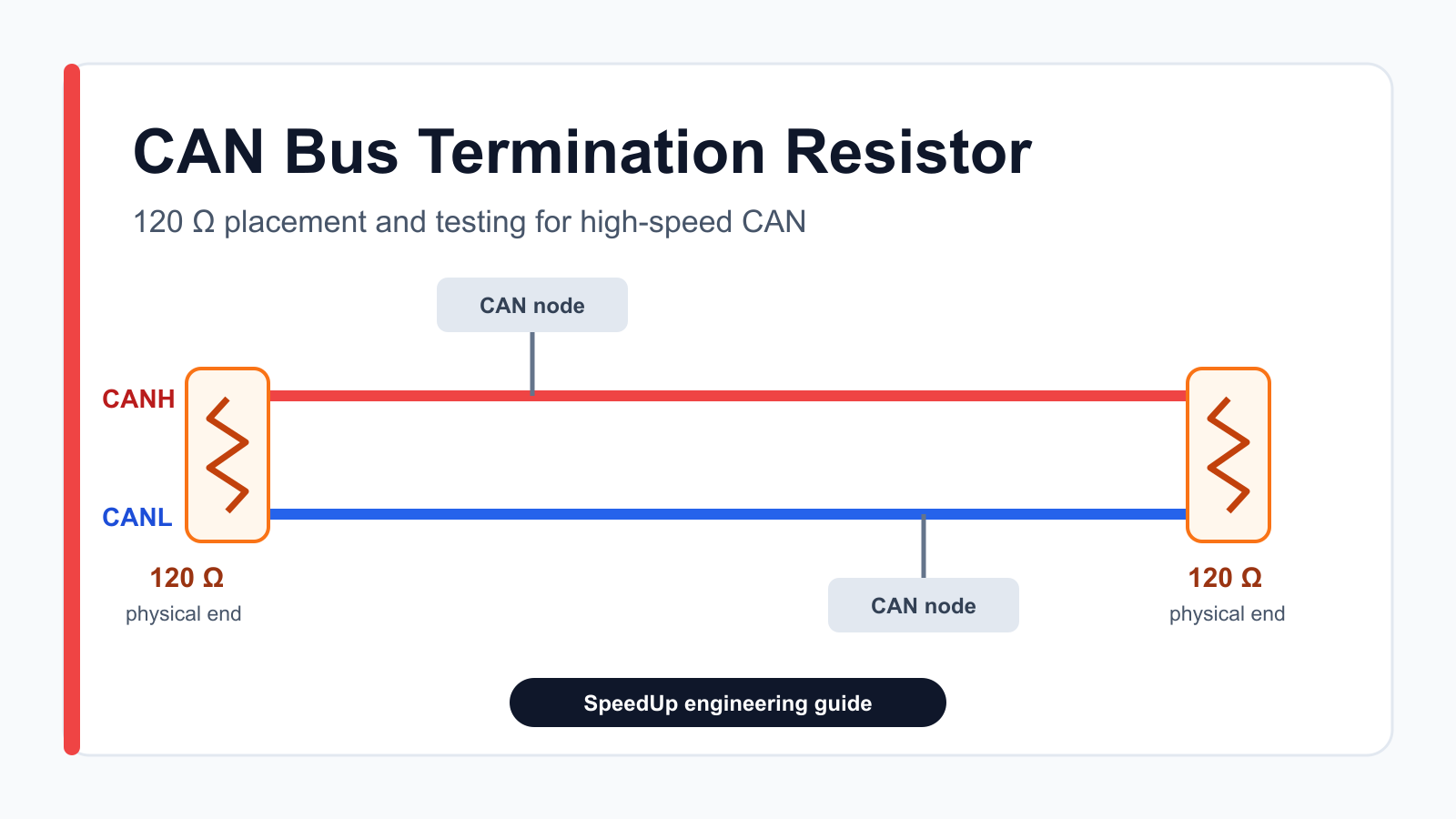
Learn where to place CAN bus termination resistors, why two 120Ω endpoints measure about 60Ω, and how to review standard, split, and selectable termination.
Calculate I2C pull-up resistor values, compare 100 kHz and 400 kHz examples, and review a real KiCad bus before PCB layout.